About Rabat
About Rabat
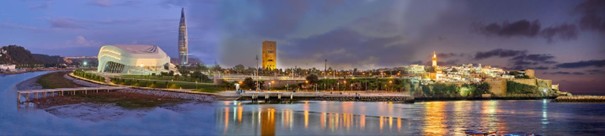
Rabat is the capital city of Morocco and one of the country’s four imperial cities. It is located on the Atlantic coast at the mouth of the Bouregreg River, facing the city of Salé. Rabat enjoys a mild Mediterranean climate, making it comfortable year-round for conferences and events. The city is known for its safety, cleanliness, and efficient public services. Key landmarks include the Hassan Tower, the Mausoleum of Mohammed V, and the Kasbah of the Udayas (a UNESCO World Heritage Site). Rabat offers a wide range of international hotels, conference facilities, and business services. The city is well connected via Rabat–Salé International Airport, high-speed rail, and modern road networks. Rabat combines rich history, modern infrastructure, and a relaxed atmosphere ideal for international conferences.
Language
The official language of Morocco is Arabic. As it is the case of all Arabic countries where people are more used to speaking the local dialect, in Morocco the local dialect is named Darija. Amazigh (Berber which is not an Arabic dialect) is also an official language and widely spoken. French is commonly used in business, administration, and higher education. English is increasingly spoken, especially among younger professionals and in the conference and tourism sectors. Spanish may be heard in some regions, though it is less common in Rabat. Most conference venues, hotels, and service providers operate comfortably in French and English. Multilingual signage is common in major public areas and institutions. Professional interpretation and translation services are readily available for international events.
Weather
Rabat has a mild Mediterranean climate influenced by the Atlantic Ocean. Temperatures are generally moderate throughout the year, with comfortable winters and warm summers. Rainfall is concentrated mainly between November and March. Sea breezes help keep the climate pleasant, especially during warmer months.
Weather in March
March marks the transition from winter to spring in Rabat. Average daytime temperatures range between 16°C and 20°C, with cooler evenings. Rainfall decreases compared to winter months, and sunny days become more frequent. March offers comfortable conditions ideal for outdoor activities, and city exploration.
Currency
The official currency of Morocco is the Moroccan Dirham (MAD). Banknotes are issued in denominations of 20, 50, 100, and 200 dirhams, with coins in smaller values. Foreign currencies can be exchanged at banks, hotels, and authorized exchange offices. Major credit and debit cards are widely accepted in hotels, restaurants, and larger shops. ATMs are readily available throughout Rabat and at the airport. Cash is recommended for small purchases, taxis, and local markets. The Moroccan Dirham is a controlled currency and cannot be taken out of the country. Currency exchange receipts should be kept until departure.
Power Plugs/Outlets
Morocco uses Type C and Type E electrical outlets. The standard voltage is 220V with a frequency of 50Hz. Type C plugs have two round pins and are common across Europe. Type E plugs also have two round pins with a grounding pin. Most modern hotels and conference venues support both plug types. Visitors from the UK, USA, Gulf countries, or other regions may need a plug adapter. Voltage converters are recommended for devices that do not support 220V. USB charging ports are increasingly available in hotels and airports.
Clothing
Rabat has a modern and relaxed dress style. Light, breathable clothing is recommended during the day, especially in warmer weather. Smart casual or business attire is suitable for conferences and professional meetings. A light jacket or sweater is useful for cooler evenings and air-conditioned venues. Comfortable footwear is recommended for walking and city exploration. Sunglasses and sun protection are useful on bright days. Evenings may feel cooler near the coast, so layering is practical. In March, layered clothing works best due to mild days and cooler nights.
Walking
Rabat is a pedestrian-friendly city with many wide sidewalks and promenades. The Bouregreg River waterfront and the Kasbah of the Udayas offer scenic walking routes. City streets in the medina can be narrow, so comfortable shoes are recommended. Traffic is generally moderate, but caution is advised at busy intersections. Many conference venues and hotels are within walking distance of restaurants and shops. Public parks and gardens provide pleasant areas for leisure walks. Walking tours are a popular way to explore historical and cultural sites. Street signage is mostly in Arabic and French, so a map or navigation app can be helpful.
Water
Tap water in Rabat is generally treated and considered safe for washing and brushing teeth. However, many visitors prefer to drink bottled water for safety and taste. Bottled water is widely available in supermarkets, hotels, restaurants, and cafes. It is affordable and comes in various sizes, from small bottles to large jugs. Avoid consuming ice made from tap water unless you are sure it is purified. Staying hydrated is important, especially during warmer months or when attending conferences. Reusable water bottles can be refilled at hotels and restaurants. Some high-end hotels provide filtered or mineral water for guests.
Local Customs (Do’s and Don’ts in Morocco)
Do’s
- Greet people politely; a handshake is common in business settings
- Dress neatly, especially in professional and formal settings
- Use your right hand when giving or receiving items
- Respect personal space in public and professional environments
- Show appreciation for Moroccan hospitality and cuisine
- Follow local etiquette when visiting restaurants, cafes, or conference venues
- Learn a few basic Arabic/Darija phrases; it is appreciated
Don’ts
- Don’t raise your voice or show impatience in public
- Avoid public displays of affection
- Don’t take photos of people without their permission
- Avoid discussing sensitive political or religious topics
- Don’t point your feet at people or religious objects
- Avoid littering or disrespecting public spaces
- Don’t bargain aggressively in professional or formal settings
- Avoid drinking alcohol in public areas outside licensed venues
Tipping
- Tipping in Morocco is appreciated but not required.
- In restaurants and cafés, as well as for hotel staff, tour guides, drivers, etc., a modest tip is often given as a thank-you for good service. The common 10-15% is not necessarily respected.
- Tips are generally given in cash and generally range between 5 to 20 MAD.
Things to Do in Rabat
- The Medina of Rabat – Wander through the traditional markets, local shops, and artisan stalls
- Bouregreg Marina and Riverfront – Enjoy cafés, restaurants, and scenic boat views along the river
- Rabat Beaches – Enjoy relaxing walks or sunbathing along the Atlantic coastline
Gardens and Parks
- Andalusian Gardens – Historic landscaped garden near the Kasbah of the Udayas, Rabat
- Botanical Garden – Large botanical garden in the Agdal district, with entrance on Avenue Annasr
- Nouzhat Hassan Garden – Public Garden located near Avenue Al Mansour Adahabi in central Rabat
- Hassan II Park – Spacious urban park along Avenue Imam Malik and Avenue Mohammed VI
- Urban Forest Ibn Sina “Hilton” – Large wooded park area near Sofitel and Agdal, great for walking trails and nature
- Corniche Bouregreg – Scenic waterfront promenade along the Bouregreg River, ideal for leisurely walks
- Les Jardins Exotiques de Bouknadel – Beautiful exotic botanical gardens just outside Rabat (on Route de Kénitra)
Museums and Cultural Sites
- Mohammed VI Museum of Modern and Contemporary Art – Showcases contemporary Moroccan and international art
- Archaeological Museum of Rabat – Features artifacts from prehistoric, Roman, and Islamic periods
- Chellah Necropolis – Historic Roman and medieval ruins surrounded by gardens
- Kasbah of the Udayas – Historic fortress with Andalusian-style gardens and scenic views
- Hassan Tower – Iconic unfinished minaret and a landmark of the city
- Mausoleum of Mohammed V – Modern Alaouite architecture housing the royal tombs
- Rabat Archaeological Site of Sala Colonia – Ancient Roman settlement ruins
- National Library of the Kingdom of Morocco – Hosts cultural exhibitions and events
Shopping, Dining, and Entertainment
Shopping
- Morocco Mall Rabat – Modern shopping center with international brands
- Medina of Rabat – Traditional market for handicrafts, carpets, pottery, and souvenirs
- Rue des Consuls – Streets lined with artisan shops and local boutiques
Dining
- Bouregreg Marina – offers a lively waterfront setting with a variety of restaurants and cafés serving different types of cuisine, all overlooking the river between Rabat and Salé.
- Le Dhow – Riverside restaurant offering Moroccan and international cuisine on a boat.
- Dar Naji – Traditional Moroccan restaurant in the Medina serving tagine and couscous
- El Menzeh – Modern Moroccan cuisine with rooftop views
- Café Maure – Famous for mint tea and pastries in the Kasbah of the Udayas
Entertainment
- Théâtre National Mohammed V – Venue for theater performances and cultural shows
- Bouregreg Marina Promenade – Leisurely walks, cafés, and occasional live music
- Rabat Beaches (Plage de Temara, Plage des Nations) – Sunbathing, beach sports, and boat rides
Important Notes
- Visa & Entry: Check visa requirements before traveling; many nationalities require a visa to enter Morocco
- Health & Safety: Rabat is generally safe; basic health precautions are recommended, and travel insurance is advised
- Emergency Numbers: Police: 19, Ambulance: 150, Fire: 15
- Time Zone: Morocco Standard Time (GMT+1)
- Mobile & Internet: SIM cards are widely available; most hotels and cafés offer Wi-Fi
- Money & Payments: Keep small cash for local purchases; ATMs are widely available
- Local Laws & Etiquette: Respect local customs and laws; avoid public drinking of alcohol outside licensed venues
- Weather Preparedness: Carry a light jacket in spring and autumn; check weather forecasts for outdoor events
- Transportation: Plan ahead for airport or train transfers using Grand Taxis, ride-hailing apps, or private transfers.
- Language Tips: Learning a few basic Arabic or French phrases is appreciated and helpful for navigating the city.
In Case of an Emergency
- Police: Dial 19 for immediate police assistance
- Ambulance / Medical Emergency: Dial 150
- Fire Department: Dial 15
- Hospital Contacts: Major hospitals in Rabat include Rabat University Hospital (CHU Ibn Sina) and Salé Hospital for urgent medical care
- Hotel Assistance: Contact the front desk or concierge for help with local emergency services or translation support
- Embassy / Consulate: Keep your country’s embassy or consulate contact details handy for consular assistance
- First Aid: Basic first aid kits are available in most hotels and conference venues
- Stay Calm and Follow Instructions: Follow local authorities’ directions and inform someone of your location if traveling alone
- Private Emergency Medical Assistance: In case of an extreme medical emergency, it is possible to call upon private medical facilities that come to the location of the emergency and also provide ambulance transport.
- Language Note: It is recommended to use your browser’s translation facility, as the following services are in French: